

Advanced Physiotherapy in Kannur
Kerala's most comprehensive physiotherapy centre offering cutting-edge modalities including Shock Wave Therapy, Spinal Decompression, Dry Needling, and Manual Therapy — all under one roof.
Book Physiotherapy SessionFeatured treatment · ROBO SPINE-100
Robotic Spinal Decompression Therapy
Available at Manthra Wellness, this non-surgical, computer-controlled treatment uses gentle, precisely programmed stretching to help reduce pressure on spinal discs and nerves.
Unlike traditional traction, robotic decompression allows your therapist to adjust treatment parameters to your needs. It may help selected patients with back pain, neck pain, and nerve-related symptoms as part of a personalised physiotherapy plan.
More Details opens the manufacturer’s website. Treatment guide: Word document (.docx).
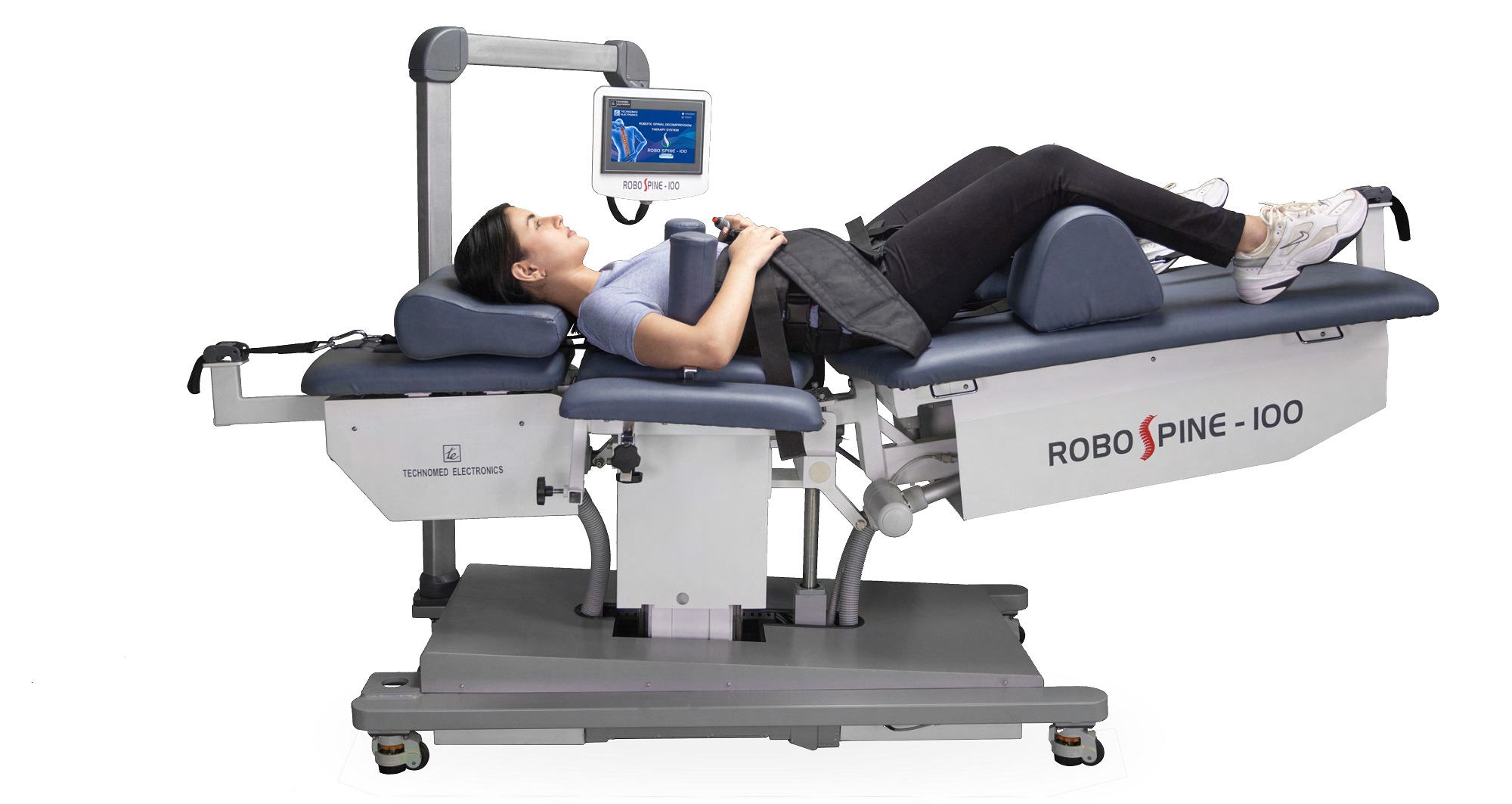
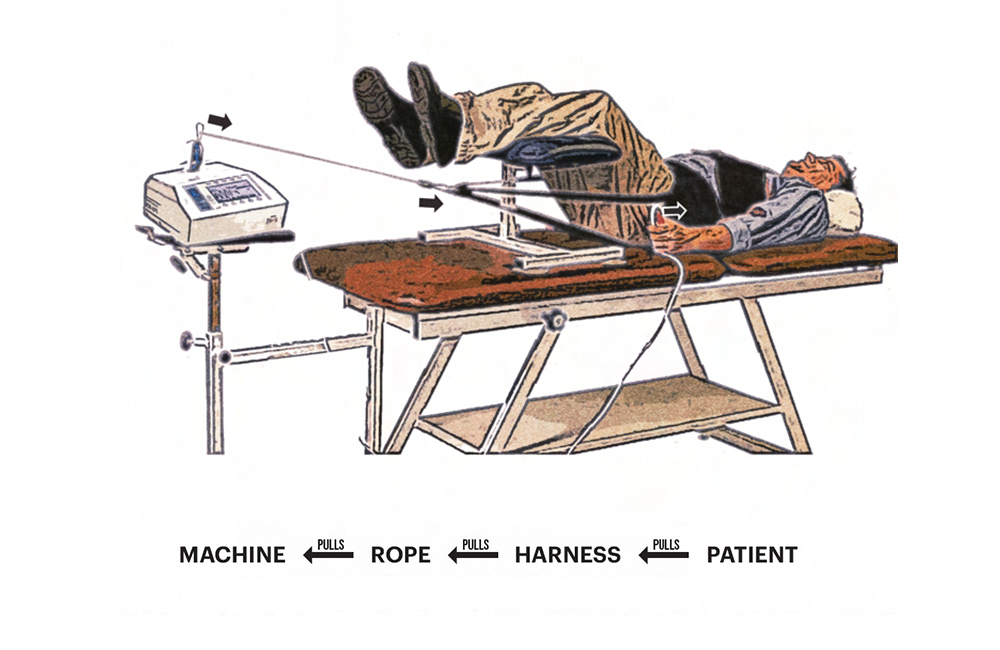
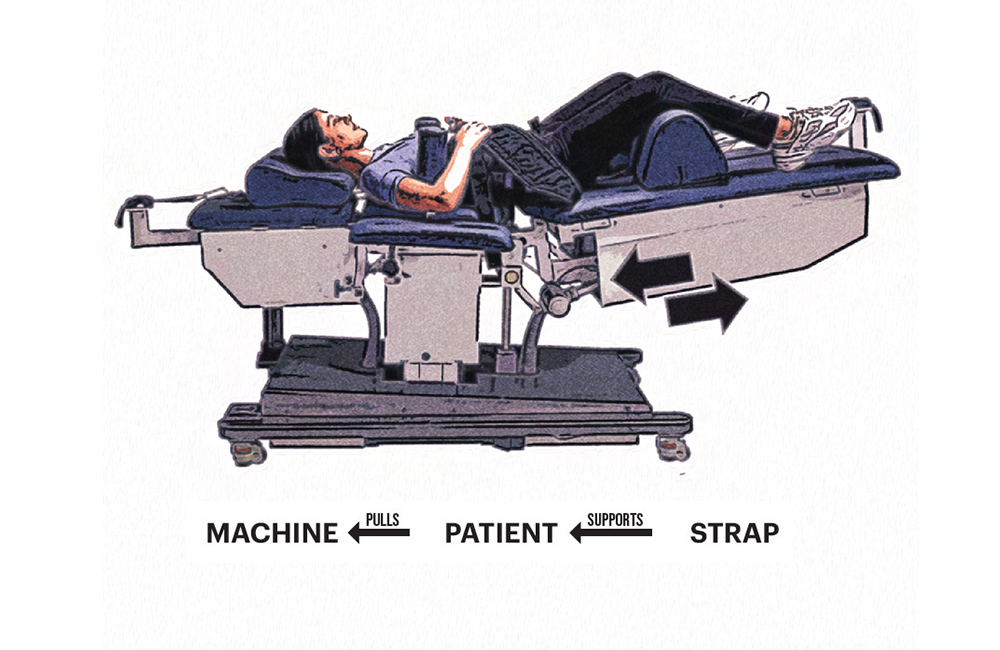
Product photographs: Technomed Electronics. Manufacturer images, not photographs of our facility.
Treatment guide
What is robotic spinal decompression therapy?
Robotic spinal decompression therapy is a non-surgical, computer-controlled treatment designed to relieve back pain, neck pain, and nerve-related symptoms by gently and precisely decompressing the spine. It aims to take pressure off spinal discs and nerves and support the body’s natural recovery processes.
Unlike traditional traction, this approach uses programmable robotic forces to target the affected spinal area. The treating clinician tailors the settings to your needs as part of an individualised care plan.
How does robotic spinal decompression work?
The treatment aims to reduce intradiscal pressure in a controlled, targeted manner. The guide explains the process in six stages:
- 1
Controlled robotic spinal stretching
The patient lies comfortably on a robotic decompression table. A computer-guided system applies gentle, intermittent traction based on parameters selected by the treating clinician.
- 2
Reduction of intradiscal pressure
The controlled pull is intended to create negative pressure within the spinal disc, reducing the load on the disc and nearby structures.
- 3
Disc retraction
Reduced pressure may help bulging or herniated disc material move toward its normal position and ease pressure on spinal nerves. This response is not guaranteed.
- 4
Increased intervertebral space
Gentle separation between vertebrae aims to reduce nerve-root compression and decrease stress on facet joints and ligaments.
- 5
Support for disc nutrition
The treatment is intended to support movement of water, oxygen, and nutrients into the disc. These are important for disc hydration and repair; treatment does not guarantee disc healing.
- 6
Muscle relaxation and pain reduction
Programmed pull–relax cycles aim to limit muscle guarding and may reduce muscle spasm, improve mobility, and ease pain.
What are the potential benefits?
The guide describes the following treatment goals. Individual results vary, and these benefits are not guaranteed.
- May reduce back and neck pain
- May relieve symptoms related to nerve compression
- Aims to support disc hydration and healing
- May improve spinal mobility
- May reduce muscle spasm
- Non-surgical and drug-free treatment
- May improve daily function
- Aims to support local circulation and recovery
- May support longer-term improvement when combined with physiotherapy
Which conditions may benefit?
Decompression may be considered when disc pressure and nerve compression contribute to pain or reduced function, including:
- Slip disc / disc bulge
- Disc herniation
- Sciatica
- Degenerative disc disease
- Cervical radiculopathy
- Lumbar radiculopathy
- Chronic neck pain
- Low back pain
- Facet joint–related pain (selected cases)
A diagnosis alone does not establish suitability. Your clinician will assess you before recommending treatment.
Questions & answers
Robotic spinal decompression: frequently asked questions
What is robotic spinal decompression therapy?
It is a non-surgical, computer-controlled treatment that gently stretches the spine. It is designed to help reduce pressure on spinal discs and nerves in selected patients with back pain, neck pain, or nerve-related symptoms.
How is it different from traditional traction?
A robotic system allows the clinician to programme and adjust the force, positioning, and pull–relax cycles for the patient’s needs. The document describes this as targeted, level-specific decompression.
What happens during treatment?
You lie on a decompression table while a computer-guided system applies controlled, intermittent traction. Your clinician selects the settings following an assessment and monitors your comfort and response.
Can it help a slipped disc or sciatica?
Some patients with disc bulges, herniated discs, or sciatica may benefit when disc pressure or nerve compression contributes to their symptoms. An assessment is needed to identify the cause and decide whether decompression is appropriate.
Can it be used for neck pain as well as back pain?
It may be considered for selected cervical and lumbar conditions, including neck pain and low back pain. Your clinician will assess the affected area and choose a suitable treatment approach.
Is robotic spinal decompression a surgical treatment?
No. It is a non-surgical, drug-free treatment modality. This does not mean that other prescribed medicines or treatments should be stopped; discuss your care plan with your clinician.
Should it be combined with physiotherapy?
The guide describes decompression as part of a broader physiotherapy plan. Exercises, rehabilitation, and advice tailored to your condition may support mobility, daily function, and longer-term symptom management.
Is it suitable for everyone, and are results guaranteed?
No. Suitability depends on your diagnosis, medical history, and clinical assessment. Benefits vary, and disc healing or lasting pain relief cannot be guaranteed. Your clinician will discuss expected benefits, risks, and alternatives before treatment.
Adapted from the attached treatment guide. Outcomes vary; decompression is not suitable for everyone and does not guarantee disc healing or lasting pain relief. A clinical assessment is required before treatment.
World-Class Care
Why Choose Manthra for Physiotherapy?
Our Advanced Physiotherapy Department is equipped with state-of-the-art technology and staffed by experienced specialist physiotherapists. We combine the latest evidence-based techniques with a compassionate, patient-centered approach to deliver exceptional outcomes.
Whether you are recovering from surgery, managing chronic pain, rehabilitating from a sports injury, or seeking to improve function and quality of life, our team creates personalized treatment plans that deliver real, lasting results.
- Evidence-based treatment protocols
- State-of-the-art equipment
- Experienced specialist physiotherapists
- Personalized care plans
- Integration with Ayurveda for holistic healing
- 24/7 emergency physiotherapy support
Our Specializations
Physiotherapy for Every Stage of Life
Sports Physiotherapy
Specialized care for athletes and active individuals recovering from sports injuries.
Pediatric Physiotherapy
Child-specific physiotherapy addressing developmental delays, cerebral palsy, and orthopaedic conditions.
Geriatric Rehabilitation
Comprehensive care for elderly patients to restore function, mobility, and independence.
Antenatal & Postnatal
Specialized programs for expectant and new mothers to manage pain and restore strength.
Treatment Modalities
Advanced Therapeutic Techniques
We offer the full spectrum of physiotherapy modalities available in modern rehabilitation medicine.
Understanding Advanced Physiotherapy
Advanced Physiotherapy at Manthra Health and Wellness Clinic represents the pinnacle of rehabilitative medicine in Kannur, Kerala. Our multidisciplinary approach integrates the most effective evidence-based physiotherapy techniques with cutting-edge therapeutic modalities to deliver superior patient outcomes across a wide spectrum of musculoskeletal, neurological, and sports-related conditions.
Shock Wave Therapy in Kannur
Extracorporeal Shock Wave Therapy (ESWT) is a non-invasive treatment that delivers acoustic energy to injured tissues. This FDA-approved modality is particularly effective for tendinopathies, plantar fasciitis, calcific shoulder tendinitis, and chronic musculoskeletal conditions that have not responded to conventional physiotherapy. At Manthra Wellness, we use the latest generation shock wave equipment for maximum therapeutic efficacy.
Robotic Spinal Decompression Therapy
Our computer-controlled spinal decompression treatment uses gentle, programmed traction to help reduce pressure on spinal discs and nerves in suitable patients. Explore the ROBO SPINE-100 machine, potential benefits, and treatment guide above.
Dry Needling
Dry needling is a skilled intervention that uses a thin filiform needle to penetrate the skin and stimulate underlying myofascial trigger points, muscular and connective tissues for the management of neuromusculoskeletal pain and movement impairments. Unlike acupuncture, which is based on traditional Chinese medicine principles, dry needling is rooted in modern Western medicine and targets trigger points — tight knots of muscle that can cause pain and restrict movement.
Manual Therapy and Osteopathy
Manual Therapy encompasses a range of hands-on techniques performed by our skilled physiotherapists to mobilize joints, soft tissues, and neural structures. These include joint mobilization, soft tissue mobilization, neural mobilization, myofascial release, and proprioceptive neuromuscular facilitation (PNF) stretching. Osteopathy at our clinic takes a holistic approach, using manual techniques to diagnose and treat structural and functional imbalances throughout the body.
Laser Therapy
Low-Level Laser Therapy (LLLT) or Photobiomodulation uses specific wavelengths of light to interact with tissue and helps to accelerate the healing process. It is used to treat acute injuries, chronic pain, and degenerative conditions. Laser therapy reduces inflammation, promotes tissue repair, and alleviates pain without the side effects associated with medications.
Frequently Asked Questions
Start Your Recovery Today
Our expert physiotherapists are ready to create a personalized treatment plan for you.
Book Your Appointment